How to Choose the Right Tools for Wall Mounting Projects

Wall mounting projects can help to create a more organized and functional home.
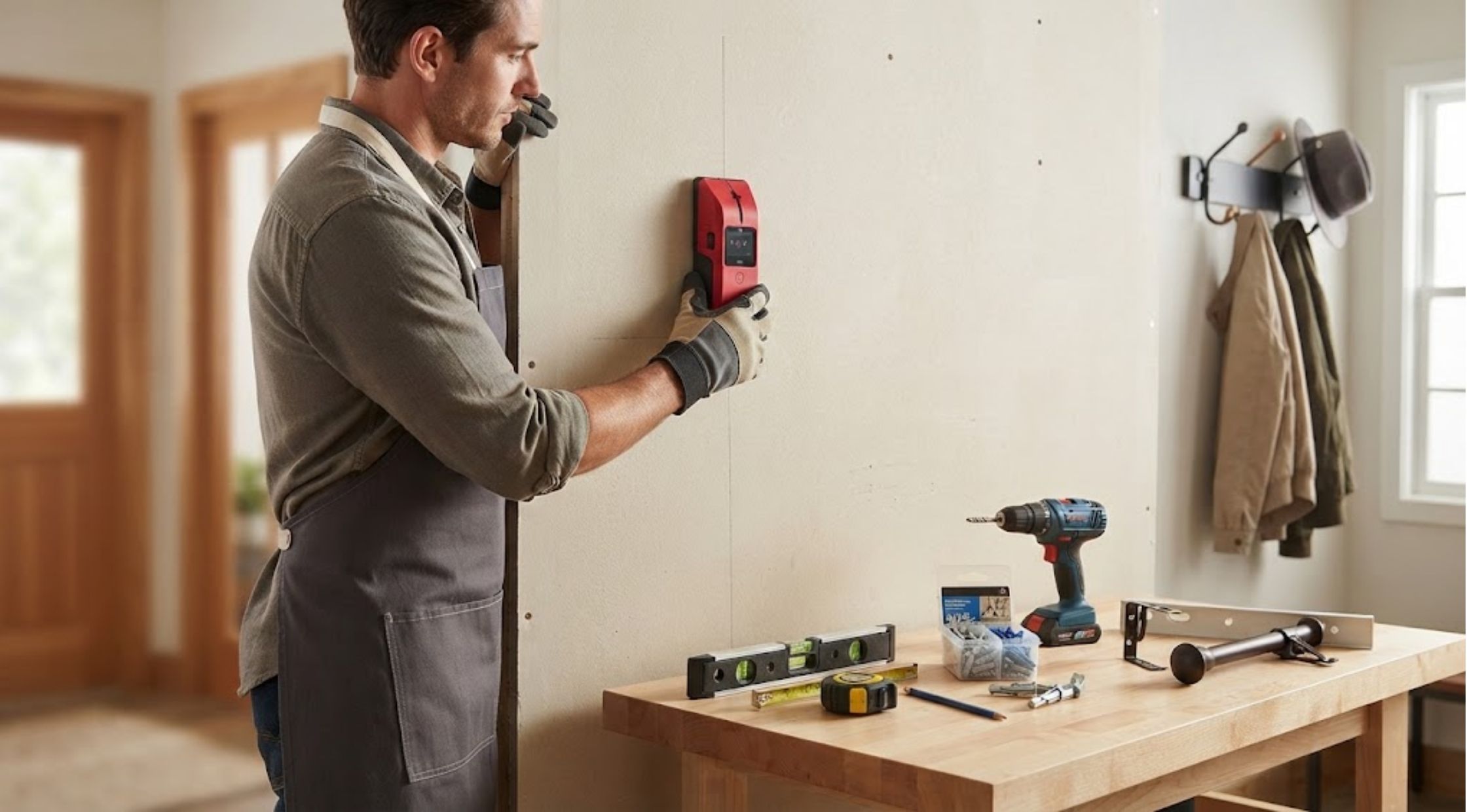
Wall mounting projects can help to create a more organized and functional home. Whether hanging coats, or mounting curtain rods, there are a number of projects that demand careful planning and secure points of attachment.
These can be made simpler by selecting the appropriate hardware and identifying wall studs. Accurate wall information can help plan your project with confidence whether you're working with a drywall molly, installing a wall mount coat rack or searching for a stud finder for curtain rods. Walabot supplies wall scanning solutions that can be applicable in cases where knowledge of the contents behind a wall is required prior to drilling or mounting.
Wall Inspection & Anchor Selection
Knowing What Is in Your Wall Is Essential Before Drilling!
When undertaking a wall mounting project, determine the type of wall and consider what could be behind the wall.
Behind drywall are any number of items including studs, pipes, electrical wiring, etc. Without knowledge of the wall, drilling can damage the wall or introduce safety hazards. First step is to determine the general location of the studs and where the mounting hardware will be installed. Walabot may be helpful when scanning some walls to locate objects or structures behind the wall prior to starting a project.
Selecting a Drywall Molly
Drywall molly are a type of hollow wall anchor used to attach things to drywall without the need for a suitable stud.
When selecting an anchor, take into account the anchor's weight as well as the thickness of the drywall that will be used. Each anchor comes with varying weight capacities and installation instructions. Do not assume that one anchor fits all projects – refer to the manufacturer's specifications. In installations of heavier items, it may be more suitable to try and find a wall stud for mounting, if available.
Careful Installation of Wall Mounted Items
First of all, you must draw a line through the desired position of the object. Always use a level to ensure that the points of mounting are aligned.
Then see if the mounting point can be fastened to a stud. Otherwise, choose the right type of drywall anchor for the right weight and drywall type. If you are not certain as to what is behind the wall, do not keep repeating your drill in that same location. Prevent any permanent holes by using a wall scanning tool like Walabot which will give you extra information before you cut.
Coat Racks & Curtain Rod Stud Scanning
There Are Many Different Types of Wall Mount Coat Rack to Choose From
A wall mount coat rack will allow for the storage of jackets, bags, hats and more, while saving up floor space.
If you are to install one, think about the amount of items you will place in it. For a bedroom you might need a small rack or for a small family entrance you might need a larger rack. Be aware of the weight of the goods to be stored, and the mounting system. If possible, attach the rack to wall studs. Use appropriate wall anchors if the studs are not placed at the correct location (as per manufacturer guidelines).
The Method of Finding the Right Studs for Curtain Rods
Curtains can exert continuous weight on curtain brackets, so it is important that they are securely fastened to curtain rods.
To find appropriate structural support behind drywall, a stud finder for curtain rods can be helpful. First, find the location of where you want the curtain rod. Next, move to the area where brackets are to be installed and scan the area. Compare the expected stud locations with the positions of the brackets. When the brackets match studs, it may be possible to do direct mounting. Walabot may be considered when extra information on what is behind the wall is desired prior to curtain hardware installation.
Error Avoidance, Safety Planning, & Layout
Tips for Avoiding Common Wall-Mounting Mistakes
A frequent error is selecting hardware that looks like the wall, but lacks the necessary characteristics. The wall behind is of equal significance as to the wall material and structure.
A second error is failure to take into consideration the weight of the item being mounted. Different mounting methods will be used for a light picture and a heavy coat rack. Don't assume that an anchor's max capacity is a standard capacity. The performance may be influenced by the installation method, wall condition, hardware quality, and load distribution.
Here Are Some Tips for Planning a Safer Mounting Project
Prepare appropriate tools and hardware before you drill. Play it safe and be sure to note all mounting points.
Review the installation instructions for the item being installed and wall anchors to be used. Before drilling, determine the contents of the wall if you are unsure what is behind it. This is especially significant around the electrical wiring or plumbing areas. One way in which Walabot can assist in this preparation process is by providing users with a scan of certain areas of the wall prior to the installation decision.
The Different Ways You Can Organize Wall Mounted Storage
Wall-mounted storage can help keep up the stuff that's utilized consistently nearby and limit ground clutter.
Wall mount coat rack is suitable for an entryway, bedroom or utility space. Wall storage can also be used in combination with shelves, hooks or cabinets. Before drilling more than one hole, make a plan for the arrangement. Take into account the size of each object, and allow adequate room for easy use. Good planning can help create a more orderly room without overpowering the wall.
Conclusion
Selecting the Proper Wall Mounting Method
Each mounting project will require varying requirements. First, determine the material of your wall, how much the object weighs and where you want to hang it.
If a hollow-wall anchor is appropriate, use an appropriate drywall molly. Use a stud finder when installing curtains to determine possible places to attach them to curtain rods. If you're not sure what might be behind some walls, Walabot can help you before you drill. If you invest a few minutes to look at what hardware you need, it can help organize and ensure your wall mounting projects are more reliable.